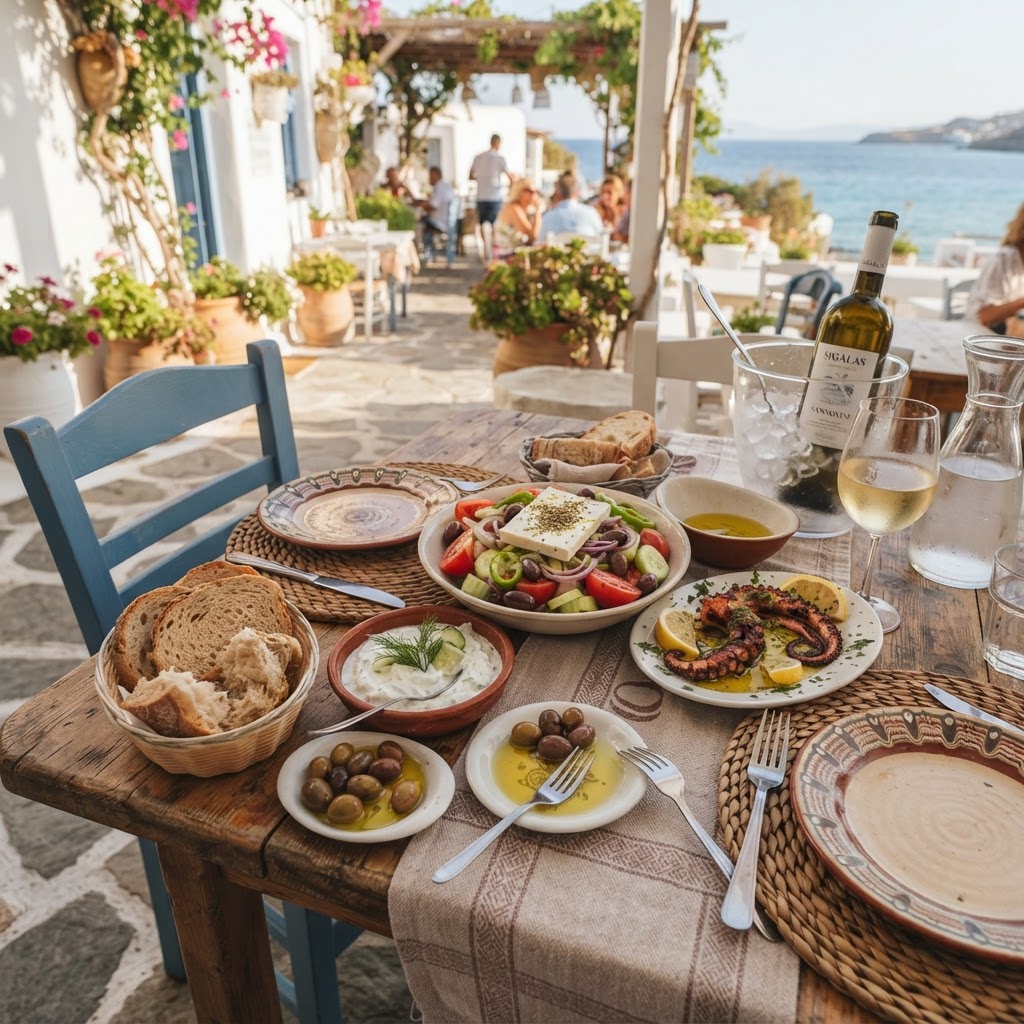
The Flavors of Greece: A Complete Guide to Greek Cuisine
The Flavors of Greece: A Complete Guide to Greek Cuisine
Greek food outside of Greece rarely does the real thing justice. In its home country, the cuisine is defined by extraordinary raw ingredients — olive oil pressed down the road, tomatoes that taste like tomatoes, fish caught that morning — treated with a deceptively simple hand. It's a cornerstone of any Greece trip, island-hopping included.
The Building Blocks
Greek cooking rests on a short list of staples used with real skill: olive oil, lemon, oregano, feta, and whatever vegetable or fish is at its peak. This is the foundation of the Mediterranean diet, and nowhere is it executed with more confidence than in a good village taverna.
Dishes to Seek Out
- →Horiatiki — the real Greek salad: tomatoes, cucumber, onion, olives, and a thick slab of feta, dressed simply in olive oil.
- →Grilled octopus — tender, smoky, and often finished with just lemon and oil.
- →Fava — a Santorini specialty: a creamy split-pea puree, often served with capers and onion.
- →Souvlaki and gyro — the beloved street-food staples, best eaten standing at a counter in Athens.
- →Moussaka — layered eggplant, spiced ground meat, and béchamel, at its best when made slowly.
- →Baklava and loukoumades — honey-soaked pastries that close out any proper Greek meal.
Regional Specialties
Crete has its own distinct food culture, considered by many the healthiest in the Mediterranean — wild greens, Cretan olive oil (some of the finest in the world), and slow-cooked lamb. Santorini's volcanic soil produces uniquely intense cherry tomatoes and the fava beans mentioned above. The Peloponnese is Greece's olive oil and citrus heartland.
Greek Wine, Reconsidered
Greek wine has undergone a quiet renaissance. Seek out Assyrtiko, Santorini's signature white — mineral, citrusy, and grown in volcanic soil unlike anywhere else on earth. Vinsanto, a sun-dried dessert wine, is a Santorini specialty worth tracking down. On the mainland and in Naoussa, Xinomavro produces structured, age-worthy reds often compared to Barolo.
Where the Food Fits Into Your Trip
If you're following our 10-day Greek islands itinerary, plan on a sunset wine tasting in Santorini and a proper long taverna lunch in Mykonos Town. In Athens, the neighborhoods of Psiri and Koukaki have some of the city's best modern Greek dining — see our Athens culture guide for a fuller itinerary.
Explore More Greece Guides
- →Greece Travel: The Complete Guide — Start planning your Greece trip.
- →Santorini vs. Mykonos — Where to eat on each island.
Want a Greece itinerary built around the food and wine? Get in touch — it's one of our favorite things to plan.

Weekly · Curated · Unmissable
The world is waiting.
Discover it
extraordinarily.
Every week our travel editors distill years of on-the-ground experience into one beautiful email — packed with rare finds, hidden sanctuaries, and bespoke inspiration that elevates every journey.
- ✦Weekly insider travel insights
- ◈Rare destinations & hidden gems
- ◎Curated guides from our travel editors
Join discerning travellers from around the world. Unsubscribe anytime.