The Living Rituals of Kyoto's Ancient Culture
The Living Rituals of Kyoto: Japan's Ancient Culture in Modern Times
Kyoto is often described as the soul of Japan — and the description is not hyperbole.
For over a thousand years, this city served as the imperial capital, accumulating layer upon layer of cultural tradition: in its temples, its tea rooms, its craft workshops, its cuisine, and in the quiet, deeply considered way its people move through daily life. To visit Kyoto is not merely to sightsee. It is to step inside a civilisation that has been refining itself, without interruption, for millennia.
The Tea Ceremony: Ritual as Philosophy
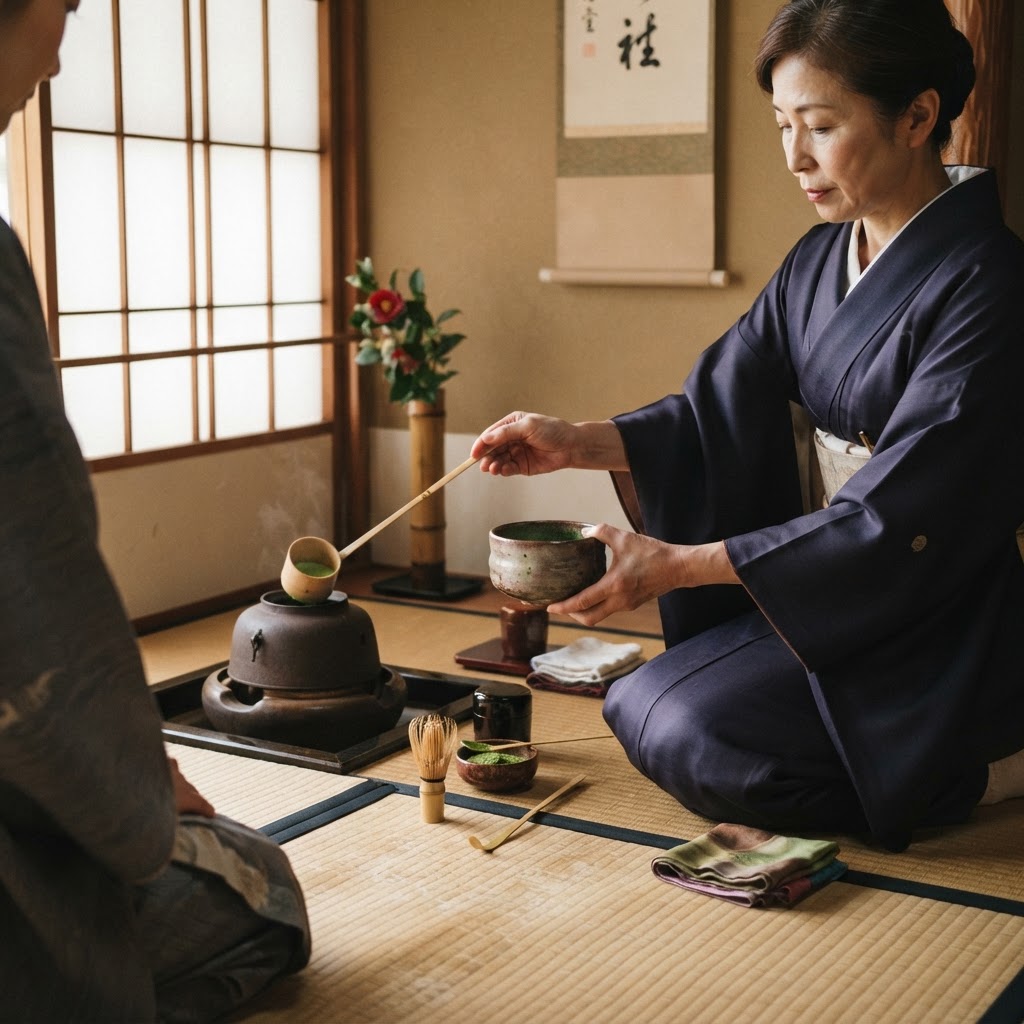
No introduction to Kyoto's culture is complete without the tea ceremony — chado, the Way of Tea. But to reduce it to a tourist activity is to miss its essence entirely.
The tea ceremony is a philosophical practice. Every gesture — the precise fold of the cloth, the angle at which the bowl is turned, the silence between host and guest — is a meditation on ichi-go ichi-e: the idea that this moment, this gathering, will never occur again. It is an argument for presence made physical.
In Kyoto, you can experience tea ceremony in settings ranging from the grand teahouses of Urasenke — one of the three great tea schools, founded in the 16th century — to intimate sessions in private machiya townhouses. We recommend the latter. The proximity, the informality, the chance to ask questions and receive genuine answers: this is where understanding begins.
Geisha Culture: Beyond the Postcard
The geisha of Kyoto — properly called geiko in local dialect, with their apprentices known as maiko — are among the most misunderstood figures in any travel culture.
They are not performers in the casual sense. They are masters of traditional arts — classical dance, shamisen (a three-stringed lute), koto (a floor harp), taiko drumming, and the complex art of conversation — who train for years before debuting. The Gion and Kamishichiken districts, where geiko culture is most concentrated, have their own economy, hierarchy, and social codes that have remained largely unchanged for centuries.
Spotting a maiko on the lantern-lit cobblestones of Hanamikoji Street at dusk is one of travel's genuinely magical encounters. Arranging a private ozashiki (geisha dinner) — something we are able to facilitate for our clients — is something else entirely: an evening of extraordinary artistry in an intimate tatami room that few visitors ever access.
Nishiki Market: The Kitchen of Kyoto
Running for five narrow blocks through the heart of the city, Nishiki Market has supplied Kyoto's households and restaurants for four centuries. Its nickname — Kyoto's Kitchen — is earned.
Here, amongst the 100-odd vendors, you will find ingredients that exist almost nowhere else: yuba (the delicate skin that forms on heated soy milk, a Kyoto speciality), tsukemono pickles in varieties that would require a separate visit to fully catalogue, fresh tofu of extraordinary fineness, and kyo-ryori (Kyoto cuisine) prepared foods that reflect the city's Buddhist temple cooking traditions.
Go in the morning. Go slowly. Eat everything you are offered.
The Temple Gardens: Silence as Art Form
Kyoto's 1,600 temples and shrines are not merely historical monuments — many remain active religious sites, and their gardens are among humanity's greatest artistic achievements.
The dry rock garden (karesansui) at Ryoan-ji — fifteen stones arranged in raked white gravel so that no arrangement reveals all fifteen at once — has been contemplated by visitors for 500 years without yielding a definitive interpretation. This is intentional. The garden is designed to resist conclusion.
The moss garden at Saiho-ji (Kokedera) covers the temple grounds in over 120 species of moss, creating a landscape of such profound, layered green that visitors are asked to copy a sutra before entering — a practice that slows the mind to the pace the garden requires.
When to Go
Kyoto in cherry blossom season (late March to mid-April) is justly famous, but genuinely crowded. For a deeper cultural encounter with more breathing room, consider:
- →Early November, for autumn foliage that rivals spring in beauty
- →February, for the Setsubun bean-throwing festival and near-empty temple gardens
- →Late June, for the Gion Matsuri preparations — the year's most important festival — before the main crowds arrive in July
Explore More Japan Guides
- →Japan Travel: The Complete Guide — Our master guide to planning your Japan trip, with seasonal advice and regional overviews.
- →Best Time to Visit Kyoto: Season-by-Season Guide — When to go for cherry blossoms, autumn foliage, or quiet winter temples.
- →A First-Timer's Guide to Kyoto — The essential temples, ryokans, and hidden corners for your first visit.
- →Japan in Autumn: The Traveler's Guide to Koyo Season — Why autumn might be the most beautiful time to visit Japan.
Kyoto rewards patience and preparation. With the right approach, it will give you something you will carry for the rest of your life.

Weekly · Curated · Unmissable
The world is waiting.
Discover it
extraordinarily.
Every week our travel editors distill years of on-the-ground experience into one beautiful email — packed with rare finds, hidden sanctuaries, and bespoke inspiration that elevates every journey.
- ✦Weekly insider travel insights
- ◈Rare destinations & hidden gems
- ◎Curated guides from our travel editors
Join discerning travellers from around the world. Unsubscribe anytime.