Kenya Safari: The Complete Guide to Planning Your 2026 Trip
Kenya Safari: The Complete Guide to Planning Your 2026 Trip
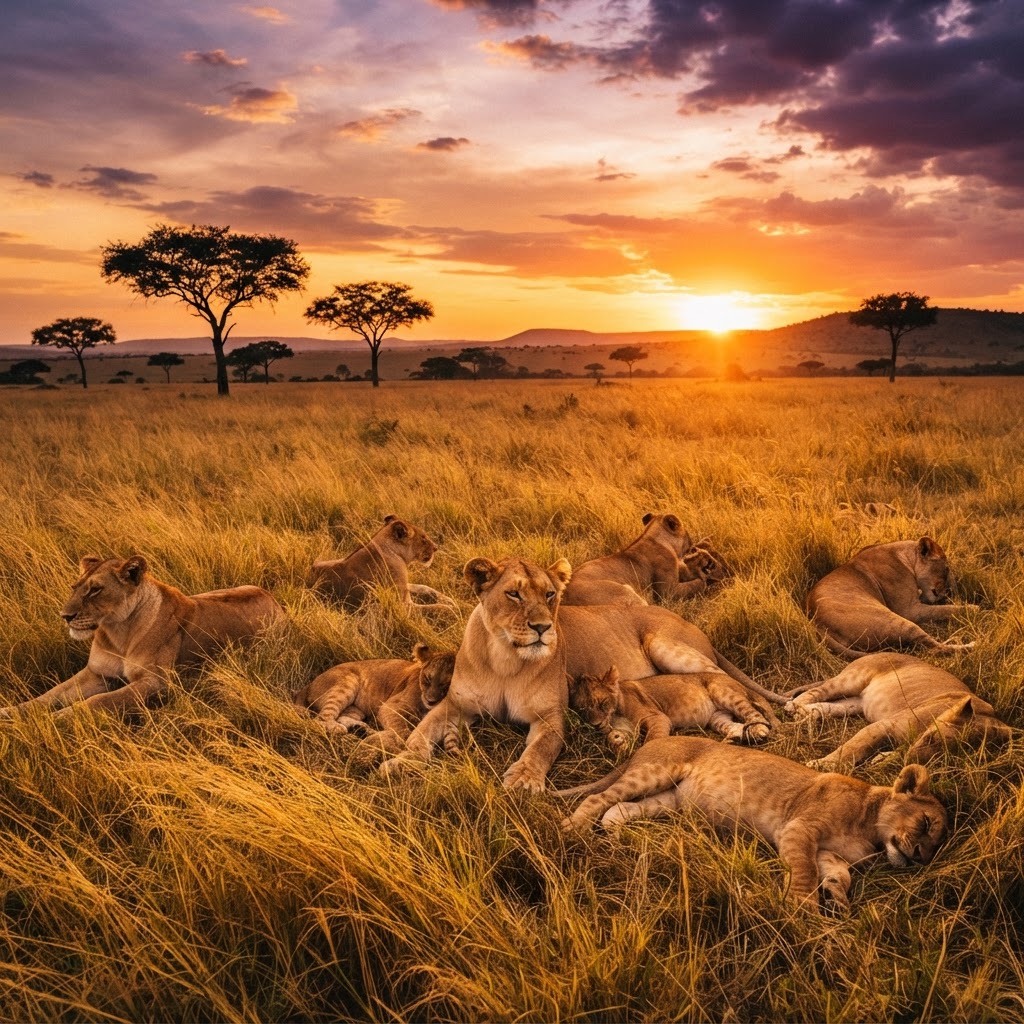
There is a moment on a Kenya safari — it usually arrives on the second or third morning, somewhere between the first cup of chai and the sight of a lion walking through long golden grass — when the noise of everyday life simply falls away. The notifications, the deadlines, the relentless hum of modern existence: gone. What remains is something primal and clarifying. This is why people return to Kenya again and again.
Watching a lion pride at dawn, witnessing a million wildebeest crossing a crocodile-filled river, or sitting in silence as a herd of elephants moves through the golden light of late afternoon — these aren't experiences you plan, they're experiences that happen to you. Your job is simply to put yourself in the right place at the right time. That's where we come in.
Here is everything you need to know to plan a Kenya safari that goes far beyond the ordinary. If this is your first visit to the continent, our guide to planning your first trip to Africa is a good place to start.
Why Kenya? The Case for the Maasai Mara
Kenya is home to some of Africa's most iconic wildlife terrain, but the Maasai Mara is in a league of its own. Bordering Tanzania's Serengeti, the Mara forms part of the world's largest terrestrial wildlife migration corridor — and it delivers year-round game viewing that rivals anywhere on the continent.
Beyond the Mara, Kenya offers extraordinary diversity: the snow-capped peaks of Mount Kenya, the flamingo-pink shores of Lake Nakuru, the arid drama of Samburu, and the elephant-filled plains of Amboseli with Kilimanjaro as a backdrop.
Best Time to Go
Peak Season: July – October Each year, over 1.5 million wildebeest, zebra, and gazelle cross from Tanzania's Serengeti into Kenya's Maasai Mara in search of grazing. The Mara River crossings — where thousands of animals plunge into crocodile-filled water in a thundering, chaotic spectacle — are among the most dramatic wildlife events on earth. This is peak season; book at least 12–18 months in advance for the best camps.
Green Season: November – March The short rains bring lush landscapes, newborn animals, and dramatically reduced crowds. This is when birdlife peaks — over 450 species have been recorded in the Mara ecosystem — and the light for photography is extraordinary. Big cats are highly active during this period. Rates at many camps drop by 20–40%.
Shoulder Season: April – June The long rains. Some camps close, roads can be challenging, but the diehards who visit during this period often describe it as the most intimate safari experience of all.
Choosing Your Camp
This is the single most important decision you'll make. The camp you choose defines your entire experience. For a closer look at what to expect at a Maasai Mara tented camp, from wake-up calls to sundowners, see our full guide.
Private Conservancies vs. National Reserve
The Maasai Mara National Reserve is the famous one — but staying inside the reserve means sharing the roads with dozens of other vehicles. Private conservancies surrounding the Mara (such as Ol Kinyei, Naboisho, or Mara North) offer something far more exclusive: off-road driving, walking safaris, and night drives — none of which are permitted in the national reserve. Conservancy camps also have strict caps on visitor numbers, meaning you may have a sighting entirely to yourself.
Maasai Mara: Our Favorite Camps
Angama Mara sits on the edge of the Great Rift Valley escarpment, 500 metres above the Mara plains. Breakfast on your private deck as hot air balloons drift across the valley below. The guides here are among the best in Africa — deeply knowledgeable and genuinely passionate.
Mahali Mzuri (Richard Branson's camp) offers 12 tented suites in an area with some of the highest predator density in the Mara. Private game drives, small guest numbers, and an infinity pool overlooking the savanna.
Ol Seki Hemingways Mara — eight tents, exceptional guiding, and a community-focused model that directly benefits the local Maasai. For something smaller and more intimate.
Amboseli: For Elephant Lovers
Against the backdrop of Mount Kilimanjaro (which, on a clear morning, towers over the plains in extraordinary fashion), the elephant herds here are habituated and extraordinary in size. Tortilis Camp and Ol Donyo Lodge both offer exceptional experiences.
Laikipia Plateau: For the Wildly Adventurous
For those seeking a more exclusive, wilderness experience away from the crowds, Laikipia offers some of Kenya's most remarkable private conservancies. Ol Pejeta is home to the world's last two northern white rhinos. Lewa Wildlife Conservancy allows night game drives — a rarity in East Africa.
What to look for in any camp: A high guide-to-guest ratio, strong conservation ethics, Maasai community partnerships, and a location deep within a private conservancy.
How Many Days Do You Need?
We recommend a minimum of 5 nights in the Mara region to give the wildlife encounters enough time to unfold naturally. Seven nights is ideal.
If you're combining regions — say, Maasai Mara with Amboseli or a coastal extension in Zanzibar — allow 10–14 days total. Rushing a safari defeats the purpose entirely.
What to Pack (The Real List)
Forget everything you've seen in safari catalogues. Here's what actually matters:
- →Neutral colors only — khaki, olive, tan, grey. No white (dust), no black (too hot), no blue (attracts tsetse flies in some regions). No bright colors.
- →Layers — mornings on the Mara at 5:30am can be surprisingly cold, even in July. A fleece and a light down jacket are essential; afternoons reach 30°C.
- →Quality binoculars — 8x42 or 10x42 minimum. This is not optional.
- →A good camera — a 100–400mm lens for DSLRs is ideal. Even a smartphone with a decent zoom will capture extraordinary images.
- →Dust-proof bag for your camera gear.
- →Closed-toe shoes for bush walks.
- →A headlamp for moving between your tent and the main area at night.
- →Plug adapters — Kenya uses the UK three-pin plug.
- →High-SPF sunscreen and a wide-brimmed hat.
What not to bring: excessive luggage. Light aircraft transfers between camps have strict baggage limits (typically 15kg in a soft bag). Pack light.
Health & Safety
- →Malaria: Present year-round in most safari regions. Antimalarials are strongly recommended — consult your doctor 4–6 weeks before travel.
- →Yellow Fever: Required if arriving from certain countries; check current requirements.
- →Vaccinations: Hepatitis A & B, typhoid, and tetanus are standard recommendations.
- →Travel insurance: Non-negotiable. Ensure it covers emergency medical evacuation — a medevac from the Mara to Nairobi costs upwards of $15,000 without coverage.
Game Drive Etiquette & What to Expect
A typical safari day starts before dawn. You'll be woken with tea or coffee, then out in the vehicle as the sun rises — the most magical light of the day, and when predators are most active. Most camps offer two drives per day: dawn (departing before sunrise) and afternoon (departing around 4pm, ending after sunset with a sundowner in the bush). Private drives allow you to set your own pace — stopping longer at sightings, going off-piste into areas group vehicles can't access.
A few things to know:
- →Stay in the vehicle at all times unless your guide explicitly says otherwise. The vehicle is your protection — animals have learned to associate it as a single, non-threatening entity.
- →Keep voices low near wildlife. Let your guide position the vehicle; they know these animals individually.
- →Be patient. The guests who see the most are the ones who are willing to wait at a sighting rather than rushing to the next one.
- →Put your phone down occasionally. Truly.
Walking Safaris
Walking with an armed ranger changes your relationship with the landscape entirely. Suddenly the details become visible: animal tracks, medicinal plants, the termite mounds that build the ecosystem. Wilderness Trails in the Mara Conservancies offer exceptional multi-day walking experiences.
The People
A safari that doesn't engage with Maasai culture is missing a profound dimension of Kenya. The best camps work directly with local communities, and a visit to a manyatta (Maasai homestead) — when done respectfully and through the right channels — is one of the most memorable parts of any Kenya trip.
Beyond the Mara: Add-On Destinations
Amboseli National Park — Famous for its large elephant herds and unobstructed views of Kilimanjaro across the Tanzanian border. Combine with the Mara for a stunning contrast in landscape.
Samburu National Reserve — Remote, raw, and less visited. Home to rare northern species: Grevy's zebra, reticulated giraffe, and the Somali ostrich. For travelers who want something genuinely off the beaten path.
Zanzibar (Tanzania) — A short flight from Nairobi, Zanzibar offers the perfect post-safari decompression: turquoise water, spice markets, Stone Town UNESCO architecture, and extraordinary seafood. The contrast with the bush is part of the appeal.
Getting There & Around
Nairobi is the main international gateway. From Nairobi, most camps are accessed by light aircraft on scheduled or charter flights — typically 45–60 minutes to the Mara airstrip. This is strongly preferred over the 5–6 hour road journey.
Build in a night in Nairobi either side of your safari — the city has excellent restaurants and the Giraffe Centre is a genuinely wonderful way to spend a morning.
Why Use a Travel Specialist
Kenya safaris are not complicated to book — but they are complicated to do well.
The difference between a mediocre safari and an extraordinary one comes down to: which conservancy you stay in, which specific camp within that conservancy, which guide you're assigned, and whether your itinerary is sequenced correctly for the time of year. A specialist who has been on the ground in Kenya — who knows the camp managers personally, who understands which areas are tracking lion movement in a given season — is not a luxury. They're the variable that makes the difference.
At Extraordinary Travel, we have deep relationships with the best camps across Kenya and a firsthand understanding of what makes each one exceptional. We don't book what's available; we secure what's best.
"Africa changes you. Not in the dramatic, cinematic way films suggest — but quietly, gradually, in the marrow of things."
Ready to start planning? Request a complimentary consultation with one of our Kenya specialists. We'll design a safari itinerary around your travel dates, interests, and vision for the trip.
Weekly · Curated · Unmissable
The world is waiting.
Discover it
extraordinarily.
Every week our travel editors distill years of on-the-ground experience into one beautiful email — packed with rare finds, hidden sanctuaries, and bespoke inspiration that elevates every journey.
- ✦Weekly insider travel insights
- ◈Rare destinations & hidden gems
- ◎Curated guides from our travel editors
Join discerning travellers from around the world. Unsubscribe anytime.