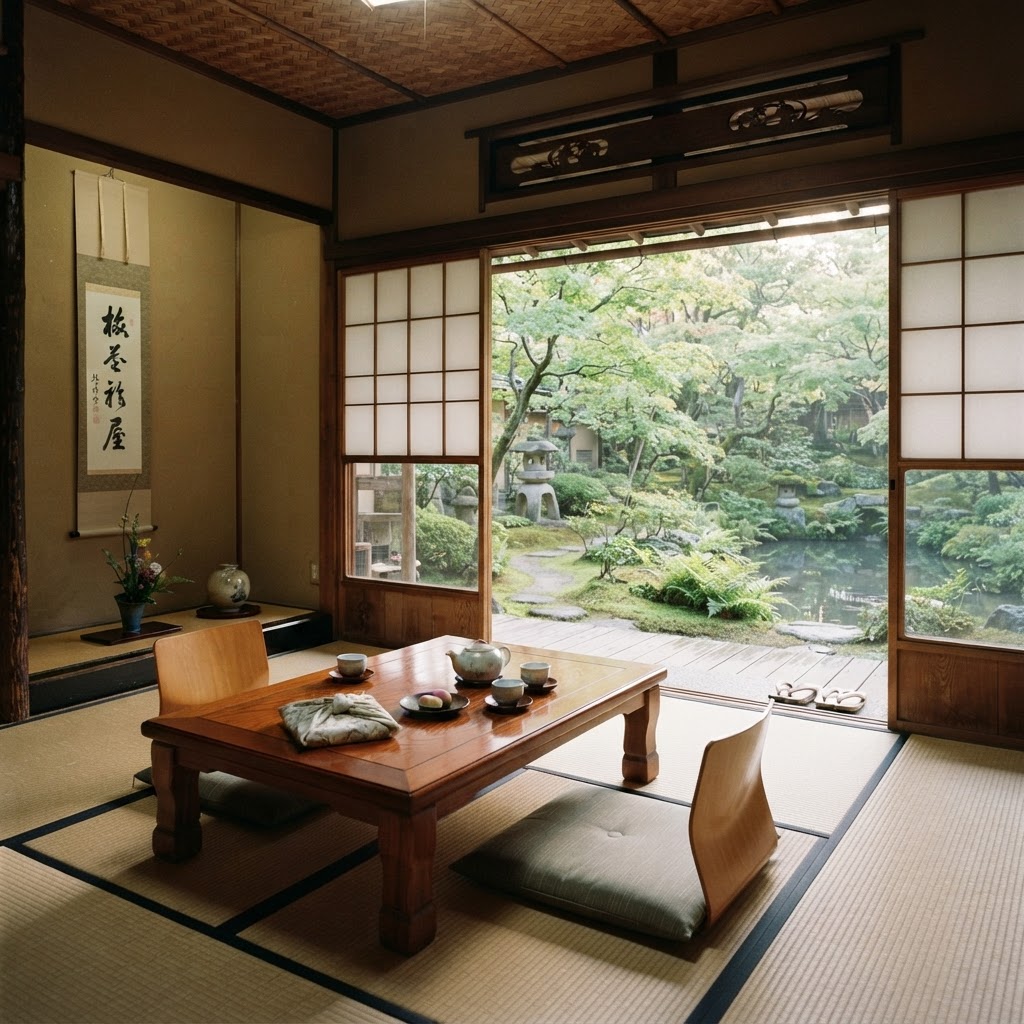
A First-Timer's Guide to Kyoto's Best Sights
Kyoto does not reveal itself to the rushed traveller. It is not a city of obvious, immediate spectacle — it is a city of accumulation, of quiet details and slow revelations. You will walk down an alley and notice that the moss on a stone wall is of fifteen different varieties. You will sit in a tea house and understand, for the first time, that silence can be a form of generosity. You will watch a woman in a kimono cross a wooden bridge at dusk, and understand why Kyoto has been considered the centre of Japanese civilisation for twelve centuries.
Here is how to experience it well. To understand the living rituals of Kyoto's ancient culture that shape everyday life here, it helps to look beyond the sightseeing list.
When to Go
Spring (late March to mid-April): Cherry blossom season — sakura — transforms Kyoto into something almost impossibly beautiful. The Philosopher's Path, the grounds of Maruyama Park, and the lanes around Gion are lined with blooming cherries, and the combination of blossom and ancient architecture is one of travel's great sights. Book accommodation a minimum of 12 months in advance; this is the most popular period in Japan's entire travel calendar.
Autumn (mid-November to early December): The koyo — autumn foliage season — is arguably even more spectacular than cherry blossom, and the crowds, while significant, are slightly more manageable. The maples at Eikan-do, the ginkgo at Tofuku-ji, and the bamboo of Arashiyama in amber and gold are extraordinary.
June and September: These shoulder months offer fewer crowds and the full Kyoto experience. June is rainy season — moody, atmospheric, and genuinely beautiful in the temple gardens. September brings warm evenings perfect for walking Gion after dark.
Essential Temples & Shrines
Kyoto has over 1,600 temples and shrines. The challenge is not finding them — it's choosing which ones to spend real time in, rather than rushing through a checklist.
Fushimi Inari Taisha
The famous tunnel of 10,000 torii gates winding up Mount Inari is one of Japan's most photographed sites. Visit before 7am to have long stretches of it to yourself. The full climb to the summit takes 2–3 hours and offers extraordinary views over Kyoto and Osaka; most tourists turn back at the first ridge, making the upper mountain almost private.
Ryoan-ji
The Zen rock garden here — fifteen stones arranged in white gravel, from which any viewing position always conceals one stone — is the subject of centuries of philosophical debate. Arrive when it opens at 8am. Sit. Resist the urge to understand it immediately.
Kinkaku-ji (The Golden Pavilion)
Absolutely worth seeing, despite being Kyoto's most visited attraction. The pavilion reflected in its mirror pond is as beautiful in person as it appears in photographs — perhaps more so. Visit mid-week and aim for opening time.
Daitoku-ji
A complex of 24 sub-temples, most of which receive only a fraction of Kinkaku-ji's visitors. Daisen-in contains one of Japan's great dry landscape gardens. Koto-in has a bamboo path of severe, meditative beauty. These are the temples where you'll spend an hour and feel you could stay all day.
Kifune Shrine
Up in the hills north of Kyoto, along a river valley, Kifune Shrine is one of the most atmospheric places in the entire city — particularly in the morning mist or during rainy season, when lanterns reflect in the river and the stone steps are covered in moss. Largely unknown to international visitors.
The Art of the Ryokan
Staying in a ryokan — a traditional Japanese inn — is, for many visitors, the defining experience of Kyoto. Done well, it is one of travel's genuinely transformative accommodations.
The ryokan experience typically includes:
- →Tatami mat rooms with futon bedding on the floor
- →Yukata robes and wooden sandals
- →A kaiseki dinner — a multi-course meal of extraordinary precision and seasonality, served in your room or in a private dining alcove
- →A communal bath (onsen), often fed by natural hot spring water
- →Ritualised service that anticipates needs you didn't know you had
Recommended Ryokan in Kyoto
Tawaraya in central Kyoto is, by almost universal consensus, the finest ryokan in Japan — perhaps the finest inn of any kind in the world. Presidents and artists have stayed here since the 18th century. It takes reservations months in advance and the rates are significant; the experience is irreplaceable.
Hiiragiya Annex — the newer wing of one of Kyoto's oldest ryokan — offers the full traditional experience at a somewhat more accessible price point, with warm and genuinely attentive service.
Nazuna Kyoto Nijo is a beautifully renovated machiya (traditional townhouse) converted into a small, design-forward ryokan. Excellent for those who want ryokan culture with a contemporary aesthetic.
Food in Kyoto
Kyoto cuisine — kyo-ryori — is one of Japan's most refined culinary traditions, rooted in Buddhist vegetarian cooking and the aesthetic principles of the imperial court.
Must-eat experiences:
- →Kaiseki — a formal, multi-course seasonal meal. At the higher end (Kikunoi Honten, Hyotei), this is one of the most extraordinary dining experiences in the world. Reserve months in advance.
- →Tofu cuisine — Kyoto's Buddhist temples gave rise to a tradition of exquisite vegetarian cooking centred on tofu. Tousuiro near Nishiki Market serves a tofu-based kaiseki that rivals meat-based equivalents in complexity and satisfaction.
- →Nishiki Market — known as "Kyoto's Kitchen," this narrow covered market is the place to graze: fresh pickles, yuba (tofu skin), grilled skewers, and the extraordinary variety of Japanese street food.
- →Matcha everything — Kyoto's Uji district produces Japan's finest green tea. Drink it as thick, whisked matcha, eat it in everything from mochi to parfait, and visit a working tea house for a proper ceremony.
Hidden Kyoto
Fushimi: South of central Kyoto, the sake-brewing district of Fushimi has canals, riverside sake warehouses, and a pace entirely its own. Gekkeikan Okura Sake Museum tells the story of Japanese sake beautifully.
Kurama and Kibune: Take the Eizan Railway north into the mountains for two small villages that feel entirely removed from the city below. Kurama has a mountain temple complex and natural hot spring; Kibune, up the river valley, has restaurants perched above the rushing water that are magical in summer.
The Philosopher's Path in autumn rain: Most visitors walk this canal-side path in fair weather. In light rain, with the maples overhead and the reflections in the water below, it is one of Kyoto's most ethereal experiences.
Practical Notes
- →Stay a minimum of four nights. Three nights is not enough for Kyoto.
- →Rent a bicycle — it is the best way to navigate between temples at your own pace.
- →Carry cash — many traditional establishments, including some ryokan and small restaurants, do not accept credit cards.
- →The IC card (ICOCA or Suica) makes navigating buses and the subway effortless.
- →Many temples have early morning hours that are open for worship before tourist hours begin. Use them.
"Kyoto teaches you that beauty is not in the remarkable, but in the precise attention given to the ordinary — a folded cloth, a raked garden, the angle of light through a shoji screen."
Explore More Japan Guides
- →Japan Travel: The Complete Guide — Our master guide covering Japan's regions, seasons, transportation, and essential tips.
- →Best Time to Visit Kyoto: Season-by-Season Guide — Choose the right season for your Kyoto trip with our month-by-month breakdown.
- →Japan in Autumn: The Traveler's Guide to Koyo Season — Discover why autumn foliage season rivals cherry blossoms for beauty.
At Extraordinary Travel, we design Kyoto itineraries that go beyond the standard circuit — including ryokan access, private temple visits, and curated cultural experiences that most visitors never encounter. If Japan is on your horizon, we would love to begin the conversation.

Weekly · Curated · Unmissable
The world is waiting.
Discover it
extraordinarily.
Every week our travel editors distill years of on-the-ground experience into one beautiful email — packed with rare finds, hidden sanctuaries, and bespoke inspiration that elevates every journey.
- ✦Weekly insider travel insights
- ◈Rare destinations & hidden gems
- ◎Curated guides from our travel editors
Join discerning travellers from around the world. Unsubscribe anytime.