Croatia Travel Guide: The Adriatic's Best Escape
Croatia Uncovered: A Guide to the Adriatic's Most Dazzling Destination
There's a moment — usually somewhere along the Dalmatian Coast, with a glass of local Plavac Mali in hand and the Adriatic glittering beneath a copper sunset — when Croatia stops feeling like a destination and starts feeling like a revelation. Few countries pack so much beauty, history, and gastronomy into such a compact stretch of coastline. Whether you're island-hopping in a rented sailboat, exploring the ancient streets of Split, or waking up to the sound of waves in a stone villa, Croatia has a way of exceeding every expectation. For a ready-made plan, see our 7-day Dalmatian Coast itinerary covering Dubrovnik, Hvar, and Split.
When to Go
The sweet spot for Croatia is late May through June or September through early October. The crowds thin, the prices drop, and the sea remains warm enough for swimming. July and August are peak season — lively and beautiful, but expect busy beaches and higher accommodation rates. Spring and early autumn offer the ideal balance of weather, atmosphere, and value.
The Dalmatian Coast: Croatia's Crown Jewel
The Dalmatian Coast stretches for over 1,700 kilometres, dotted with more than a thousand islands, islets, and reefs. The coastline is defined by dramatic limestone cliffs, hidden coves, and medieval towns that seem to emerge organically from the rock.
Dubrovnik
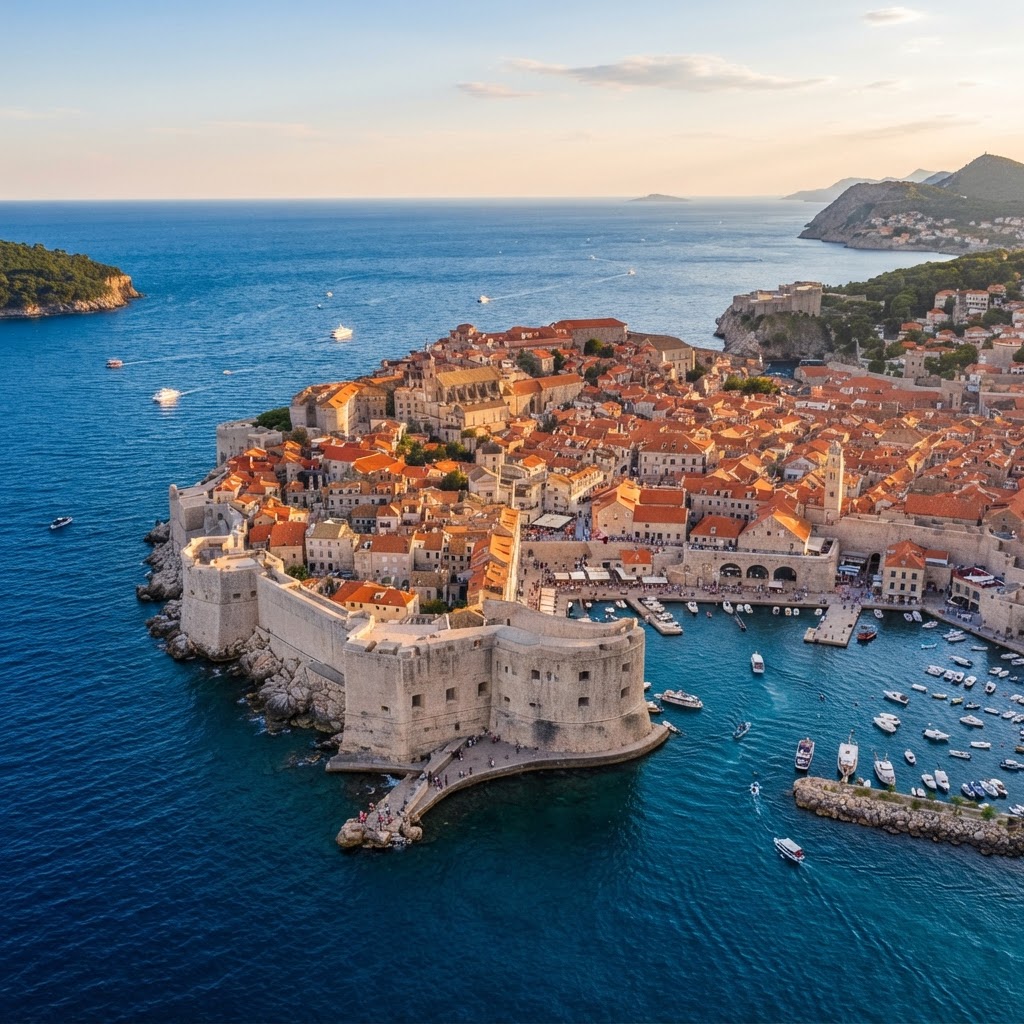
No trip to Croatia is complete without Dubrovnik — though it's worth being strategic about when you visit. The Old City, ringed by its iconic 16th-century walls, is a UNESCO World Heritage Site of extraordinary preservation. Walk the full circuit of the walls early in the morning before the cruise ships arrive, and you'll have the terracotta rooftops and cobalt sea almost to yourself. Don't miss:
- →Stradun, the main limestone-paved promenade
- →Fort Lovrijenac, perched on a 37-metre cliff just outside the city walls
- →Lokrum Island, a short ferry ride away — wild, forested, and refreshingly crowd-free
- →Bard Maro, a simple konoba (tavern) serving the freshest grilled fish you'll ever taste
Split
Split is Croatia's second-largest city and arguably its most liveable. Its heart is Diocletian's Palace, a Roman emperor's retirement complex built in the 3rd century AD — and now home to restaurants, bars, boutiques, and apartments, all within ancient walls. It's a living city, not a museum, and that energy is infectious.
Take an evening wander along the Riva promenade, rent a scooter to explore the surrounding hills, and make time for a day trip to the island of Brač, home to the famous Zlatni Rat beach — a golden spit of pebble that shifts shape with the tides.
Hvar
Hvar Town is Croatia's most glamorous address — a sun-drenched harbour town of Renaissance architecture, lavender fields, and a social scene that draws an international crowd. Take a water taxi to the Pakleni Islands for secluded swimming, explore the hilltop fortress at dusk, and book a table at Gariful for harbour-side dining at its finest.
The Islands
With over 1,200 islands to choose from, the challenge is narrowing it down. Here are three that consistently reward:
- →
Korčula — Said to be the birthplace of Marco Polo, this compact island town rivals Dubrovnik in beauty with far fewer visitors. The old town juts into the sea like a herringbone spine, with narrow lanes radiating outward from a central cathedral.
- →
Vis — The most remote of the major islands, only opened to foreign tourists in 1989. Vis rewards the traveller who makes the effort: pristine waters, exceptional wine (look for Vugava, the local white), and a quiet, unhurried rhythm of life.
- →
Mljet — Largely covered by a national park, Mljet is all forests, saltwater lakes, and cycling paths. A Benedictine monastery sits on an island within the lake — one of Croatia's most serene sights.
Beyond the Coast: Plitvice Lakes
A two-hour drive inland from the coast lies one of Europe's most extraordinary natural landscapes. Plitvice Lakes National Park is a cascade of sixteen terraced lakes connected by waterfalls, boardwalks, and emerald pools — all protected as a UNESCO World Heritage Site. Book tickets in advance (they sell out weeks ahead in summer) and arrive at opening time for the most peaceful experience.
What to Eat and Drink
Croatian cuisine is a beautiful marriage of Mediterranean simplicity and Balkan heartiness. Along the coast, the focus is on the sea:
- →Prstaci — date mussels, traditionally gathered by hand from the rocks (now protected, but still evocative)
- →Brodetto — a rich, slow-cooked fish stew typical of Dalmatia
- →Peka — meat or octopus slow-roasted under a bell-shaped lid covered with embers; always worth the 24-hour advance notice required
- →Black risotto (crni rižot) — made with cuttlefish ink and impossibly good
For wine, Croatia's indigenous varieties are revelatory. Seek out Plavac Mali from the Pelješac Peninsula (the parent grape of Zinfandel), Grk from Korčula, and the pale, mineral Pošip — one of the finest white wines you've never heard of.
Getting Around
Ferries are the arteries of coastal Croatia, operated by Jadrolinija — reliable, scenic, and affordable. A catamaran connects Split to the major islands in under two hours. For island-hopping flexibility, consider chartering a small sailboat or motorboat (a "bareboat" charter requires a sailing licence; skippered options are widely available).
For the coast and interior, car rental offers the most freedom, though parking in Old Towns is best avoided entirely.
Where to Stay
Croatia's accommodation scene has matured dramatically in recent years. Options range from boutique heritage hotels within Diocletian's Palace walls to private villa rentals on private islands. For a truly local experience, look for konoba guesthouses — family-run properties that often include home-cooked breakfasts and insider knowledge that no guidebook can match.
Explore More Croatia Guides
- →Croatia Travel: The Complete Guide — Our master guide to planning an extraordinary Croatia trip, with seasonal advice, transportation tips, and quick facts.
- →7 Days in Croatia: The Perfect Dalmatian Coast Itinerary — A day-by-day itinerary from Dubrovnik to Split.
- →Set Sail: Our Exclusive Croatia Yacht Charter, June 2027 — Join our private catamaran voyage through the Adriatic's most beautiful islands.
Croatia is one of those rare places that manages to be both extraordinarily beautiful and deeply authentic. It hasn't been smoothed out by mass tourism — the stone is still rough-hewn, the wine is still poured generously, and the locals still treat every meal as an occasion. Go soon, go slowly, and go hungry.
Ready to plan your Croatian escape? Our team at Extraordinary Travel specialises in bespoke Adriatic itineraries — from private island charters to curated culinary journeys through Dalmatia. Get in touch to start planning.

Weekly · Curated · Unmissable
The world is waiting.
Discover it
extraordinarily.
Every week our travel editors distill years of on-the-ground experience into one beautiful email — packed with rare finds, hidden sanctuaries, and bespoke inspiration that elevates every journey.
- ✦Weekly insider travel insights
- ◈Rare destinations & hidden gems
- ◎Curated guides from our travel editors
Join discerning travellers from around the world. Unsubscribe anytime.