Boutique Hotels vs. Luxury Resorts: Which Is Right for You?
When clients come to us planning a significant trip, one of the most common questions we discuss is accommodation style. For those wanting to go further still, our guide to private island retreats explores the ultimate version of this choice. Not "five-star vs. four-star" — that's a relatively blunt instrument — but rather: boutique hotel or luxury resort? These are fundamentally different experiences, and the right choice depends enormously on who you are as a traveller and what you want from your stay. For the bigger picture on how accommodation fits into a truly personalized trip, our art of personalized luxury travel is essential reading.
Let's break it down honestly.
What Is a Boutique Hotel?
A boutique hotel is typically small — rarely more than 50–100 rooms — independently owned or operated, and defined by a distinct personality. It might be a 16th-century palazzo in Venice, a converted ryokan in Kyoto, a cliff-perched manor on the Amalfi Coast, or a design-forward property in Copenhagen. What unites them is character: the sense that this place exists for a specific reason, in a specific way, and couldn't be replicated anywhere else.
The boutique experience tends to offer:
- →Genuine individuality — no two rooms quite the same
- →Highly personal service — the concierge knows your name by Day 2
- →Strong sense of place — the hotel feels like it belongs to its location
- →Immersion in local culture, food, and design
- →Smaller scale, which many travellers find more intimate and less overwhelming
The trade-offs:
- →Fewer facilities (often no pool, spa, or multiple restaurants)
- →Can feel less "complete" as a destination in itself
- →Greater variability in quality — the best boutiques are extraordinary; the worst are overpriced and under-delivered
What Is a Luxury Resort?
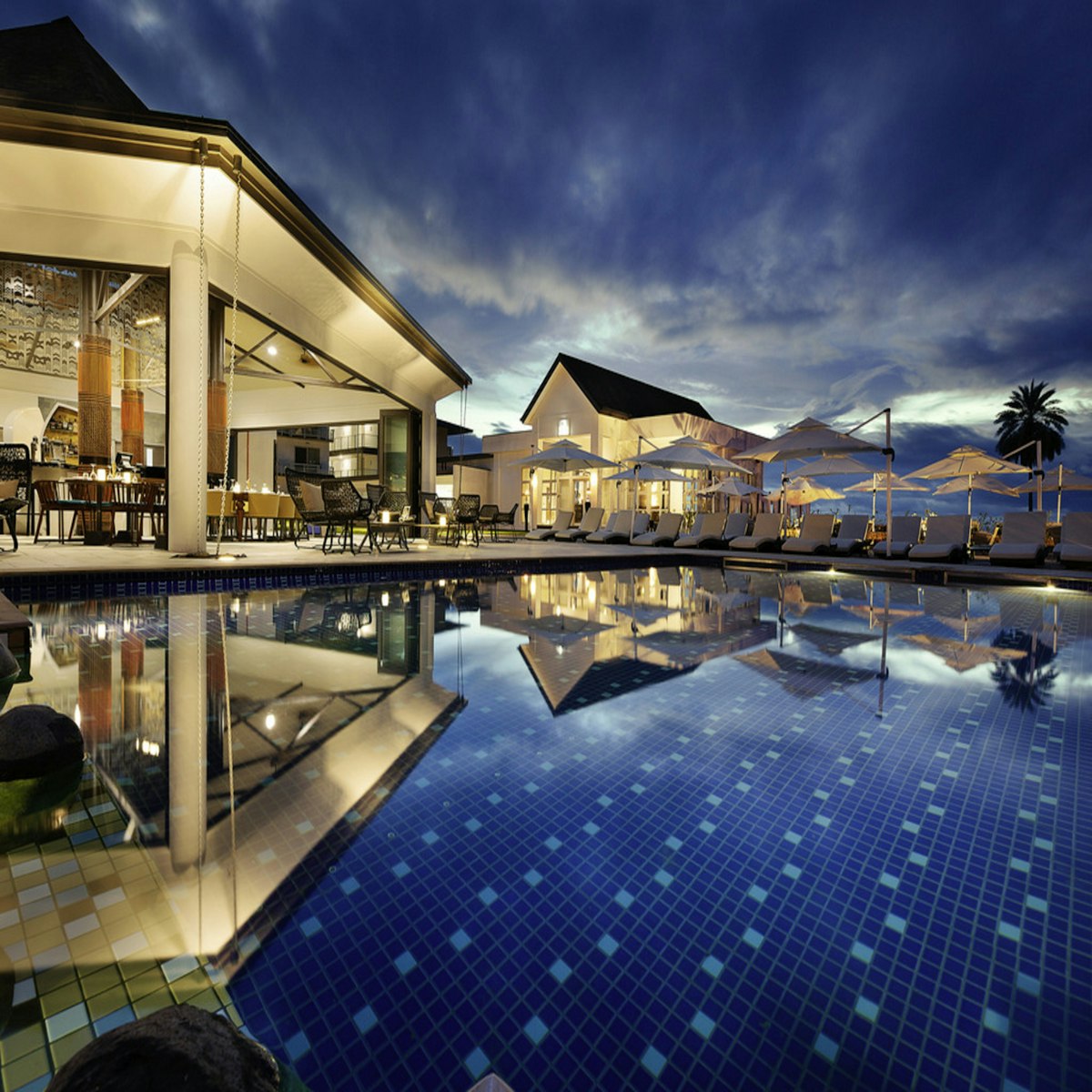
A luxury resort — think Aman, Four Seasons, Rosewood, One&Only — is designed as a destination in itself. The facility is the experience: multiple pools, a world-class spa, several restaurants, curated activities, and a level of operational consistency that is virtually guaranteed at the top tier.
The resort experience tends to offer:
- →Complete self-sufficiency — everything you could want is on-property
- →Flawlessly consistent service standards
- →Exceptional spa, wellness, and dining facilities
- →Security, particularly appealing for families with young children
- →The freedom to do nothing, beautifully
The trade-offs:
- →Less connection to local culture and community
- →Can feel insulated from the destination — you could, in theory, be anywhere
- →Higher price points for a more standardised experience
- →Less personality — the best Amans have genuine character; many luxury chains are interchangeable
The Key Questions to Ask Yourself
How important is leaving the property?
If you plan to explore — to walk cities, visit museums, eat in local restaurants, hire a guide — a boutique hotel positioned within the fabric of your destination makes far more sense. Location becomes critical, and the hotel functions as an exquisite home base.
If your ideal holiday involves days primarily spent on-property — reading by the pool, using the spa, eating well without venturing far — a luxury resort with excellent facilities is a more rational choice.
Are you travelling with children?
Luxury resorts are almost always better for families with young children. Kids' clubs, pools of varying depths, reliable Wi-Fi, room service at 9pm — the operational infrastructure of a large resort handles family logistics in ways a 20-room boutique often cannot.
That said, the right boutique — an agriturismo in Tuscany, a private villa in Bali, a family-focused lodge in Kenya — can offer a more genuinely enriching experience for slightly older children.
How much do you value consistency?
Luxury resort brands have invested enormously in ensuring that a stay at a Four Seasons in Bali delivers the same level of service as one in Maui. If you travel frequently and value knowing exactly what you're getting, this consistency has real value.
Boutique hotels are, by definition, less predictable. This variability is also their charm — the best boutiques offer experiences that no chain can replicate — but it requires a trusted recommendation to navigate well.
What destination are you visiting?
Some destinations are better suited to one model than the other:
- →Cities (Paris, Tokyo, Rome, Lisbon): Boutique hotels almost always win. Being positioned in a neighbourhood, within walking distance of real life, is part of the experience.
- →Beach destinations (Maldives, Bora Bora, Turks & Caicos): Overwater bungalows and pristine beaches often sit within resort models that make perfect sense for the location.
- →Safari (Kenya, Tanzania, Botswana): The best camps are boutique by nature — small, intimate, deeply placed in their landscape. This is boutique at its finest.
- →Cultural journeys (Japan, India, Morocco): Boutique and heritage properties — ryokans, havelis, riads — are integral to the cultural experience.
Our Approach
At Extraordinary Travel, we don't have a blanket preference. We've booked clients into the Aman Tokyo and a six-room family-run inn in rural Provence, and both were exactly right for those clients at that moment in their lives.
What matters is fit — the intersection of your travel style, the destination's character, and what you actually want to feel when you open the door to your room for the first time.
"The best hotel for you is the one that makes you forget every other hotel you've ever stayed in."
Explore More Luxury Travel Guides
- →The Art of Personalized Luxury Travel — How personalization makes the difference between a good trip and an extraordinary one.
- →Private Island Retreats — The ultimate version of the accommodation question.
- →Five Extraordinary Luxury Hotels in London — A curated selection for the city traveler.
If you'd like help navigating the options for your next trip — boutique, resort, or something in between — Extraordinary Travel is here to help you choose wisely.

Weekly · Curated · Unmissable
The world is waiting.
Discover it
extraordinarily.
Every week our travel editors distill years of on-the-ground experience into one beautiful email — packed with rare finds, hidden sanctuaries, and bespoke inspiration that elevates every journey.
- ✦Weekly insider travel insights
- ◈Rare destinations & hidden gems
- ◎Curated guides from our travel editors
Join discerning travellers from around the world. Unsubscribe anytime.